
How many people could you call right now for help who would actually show up? Not Facebook friends, or Instagram followers. Real people who’d drop what they’re doing to help you move, watch your kids, or just sit with you when things fall apart.
More than 1 in 10 Canadians aged 15 and older say they always or often feel lonely, according to Statistics Canada. Among people over 50, that number jumps to 41% at risk of social isolation. The National Institute on Ageing calls it an epidemic.
In the UK and Japan, governments actually created ministers of loneliness to try and combat this issue, and with good reason. Professor Sheila Liming argues in a podcast with Ezra Klein, that our loneliness wasn’t accidental. We designed society to be this way.
We bought houses in suburbs with generous gaps between us and our neighbours. We spread out with cars and privacy fences. We took pride in large, private spaces where we could control who entered and when.
We get everything delivered to our doorsteps, subscribe to entertainment with a click of a button, and we can apparently even have AI “think” and “create” stuff for us too. So why would we need people? We should be able to handle all aspects of life alone and succeed in all of them without a hitch, right?
The modern adult is supposed to be a fully functioning being who can do no wrong. Find a partner, have kids, succeed in your career, take care of your aging parents, stay informed about every global crisis, buy the right food, exercise two hours daily. The list goes on and on.
Asking for help is a last resort. You have to burn out first before you can ask someone to dig you out of the hole you dug for yourself because if we ask for help it means we failed.
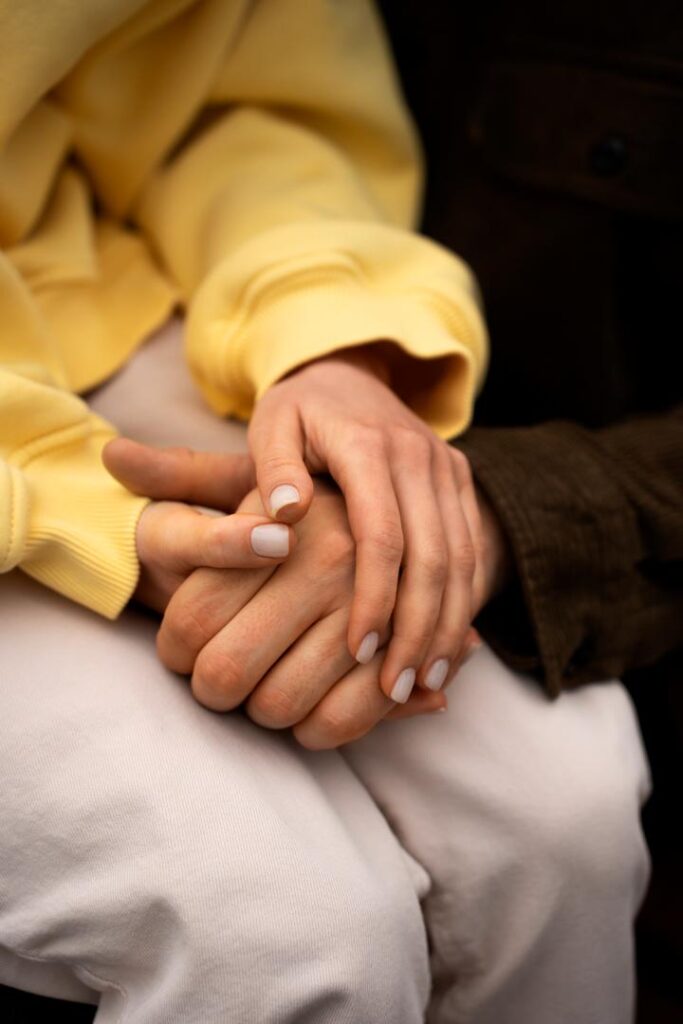
We’ve all heard countless times from previous generations how they all had these so called villages made up of families and friends that helped raise kids, take care of the business, etc. That doesn’t seem to exist anymore, and even if it did, I’m not sure it’s what we want. We as a society seem to enjoy pretending we’re not social creatures as we keep creating convenient ways to not be in the same room as someone else.
Louise Perry from The New York Times puts it directly in a recent article: “We claim to want a village, but I suspect that what we actually want is something closer to a paid service. A community that we can subscribe to when it’s convenient and back out of when it no longer works for us.”
A village with an escape hatch. But that’s not how communities work, as Perry also puts it, “If you want a village, you have to be willing to act as a villager.”
If we want someone to come and help, we also need to be willing to help others. So I started wondering what would count as a modern definition to this village concept. Networks that are built on care.
In Denmark in the 1960s, people frustrated by isolation created cohousing. Residents own private homes but share common spaces like kitchens, gardens, workshops, guest rooms. They participate in designing their community, managing it together, eating together if they want to. It combines autonomy with the advantages of shared resources and mutual support. Canada even has 24 completed cohousing communities with dozens more in development according to the Canadian Cohousing Network.
During the AIDS crisis in the 1980s, when the government ignored dying communities, queer activists built their own health clinics, food pantries, therapy groups, and needle exchanges to help each other.
There’s a non-profit organization called Time Banks all over the world that takes a very interesting approach. One hour of your time equals one credit that can be redeemed for someone else’s time and expertise. A lawyer giving legal advice earns the same as someone teaching guitar or helping with yard work. These communities are starting to pop up around Canada, using time banking to exchange skills and resources based on reciprocity instead of money.
Even closer to home, The Chippewas of Rama First Nation maintain a community farm providing fresh produce to elders, the Rama Food Bank, the Early Childhood Education Centre, and Mnjikaning Kendaaswin Elementary School. A community coming together for the community.
It seems to me like the concept of the village does exist today and in many different ways.
Our village isn’t just out there waiting to be found. It’s in what we’re willing to build, person by person, favour by favour. The village isn’t missing, we are.
The question isn’t whether we want help, the question is whether we’re willing to be the help someone else needs.
Resources added:
https://timebanking.org/timebanks/canada/
https://cohousing.ca/
https://www.canada.ca/en/national-seniors-council/programs/publications-reports/dialogue-social.html
https://reengage.org.uk/latest-news/five-years-on-from-the-first-minister-for-loneliness/
https://omf.org/us/japan-appoints-minister-of-loneliness-can-he-solve-the-loneliness-problem/

