
Every time you walk out your front door, you can either find abundant ways to connect with neighbours, friends, and friendly strangers… or not.
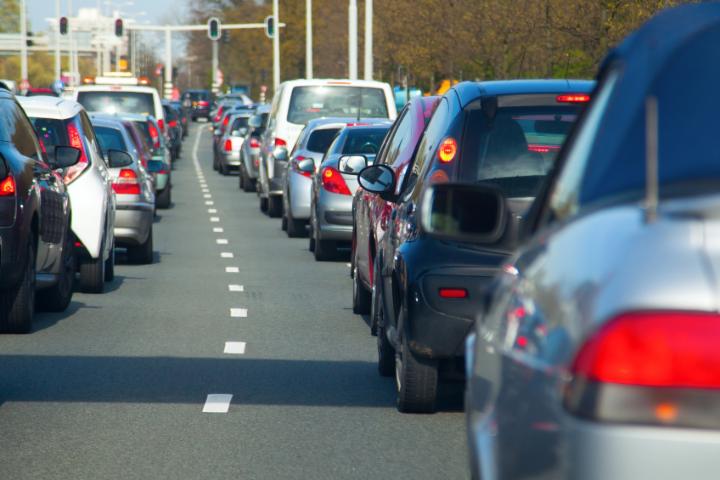
It turns out that there is a direct relationship between friendships, community, and local municipality regulations. If your days and community aren’t shaping up the way you wish they were, one reason can be that your neighbourhood was designed for cars, not people.
My journey for this article started with a recent episode in Paris Marx’s podcast, featuring Doug Gordon and Sarah Goodyear, authors of Life After Cars. The conversation digs into the less obvious fallout of car culture, going well beyond traffic flow to examine what car dependency has done to us socially.
Goodyear references research showing that “people who live on streets with a lot of traffic have fewer friendships and connections with people on their own street than those who live on lightly trafficked streets. That effect has been accumulating over generations now. I think that we’re really in a sort of almost end-stage illness with this automotive dependence and what it’s done to us as a society. The polarisation we see in our politics, the sadness, loneliness and anxiety that we see in our children, can be directly attributed to automotive infrastructure and dependence.”
We have even excluded children from society “because they can’t get out of the house without someone driving them there. The effect on children and their perceptions of the world and their ability to foster their own sense of independence is significant.”
Part of the research Goodyear mentions comes from Berkeley urban designer Donald Appleyard, who in the late 1970s compared two streets in San Francisco. On a street with light traffic (2,000 cars daily), residents knew significantly more neighbours and had substantially more friendships. On a street with heavy traffic (16,000 cars daily), residents had only one-third as many friends. Wider streets designed for faster or more traffic literally prioritizes speed over people and pushes friendship to the margins.
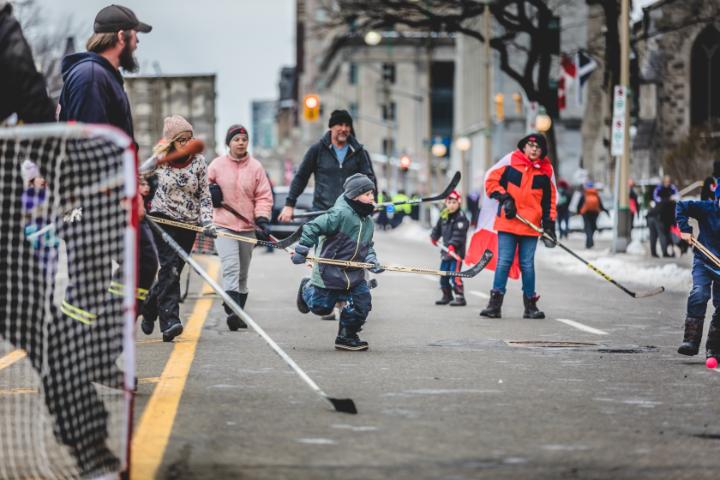
Think about what childhood used to mean. Kids walking to school, playing street hockey, riding bikes to friends’ houses. These interactions were how children learned to navigate the world independently, how they formed their own social networks, how they became part of the community rather than passengers through it. Now fewer and fewer neighbourhoods allow for this sort of freedom and belonging.
But there are alternatives emerging. The concept of “play streets” is gaining traction in communities across North America and the UK. These are regular residential streets temporarily closed to through traffic so children can play freely. Not playgrounds. Not organized activities. Just streets returned to their original purpose as public space where neighbours naturally gather and kids can be kids.
Cities are also rethinking traffic safety through initiatives like Vision Zero, which operates on the principle that no loss of life in traffic is acceptable. Instead of treating traffic deaths as inevitable “accidents,” Vision Zero redesigns streets to protect the most vulnerable users: pedestrians, cyclists, children, elderly people. The approach recognizes that when we design for cars first, people pay the price.
Paris offers a glimpse of what’s possible when a city actively chooses people over cars. The French capital has systematically reduced car access over many years, expanded bike lanes, created pedestrian zones, and reclaimed streets for community use. The results aren’t just environmental, they’re social. Cafes now spill onto sidewalks and children bike to school. The city becomes a place to be a part of, not just pass through.
Research by Jan Gehl, cited in the book Pedestrian & Transit-Oriented Design by Reid Ewing and Keith Bartholomew, shows the impact that physical distance plays on interpersonal interaction between people who share space. The closer people are, the richer the social possibilities:
At 100+ feet: You can tell a person is a person (not just an object), but that’s about it.
At 70 feet: You can recognize a face and hear a loud voice, the outer limit of social connection.
At 48 feet: You can see facial expressions in detail, so interaction starts to become possible.
At 6 to 12 feet: You’ve entered “social distance” which is close enough for easy conversation.
At 4.5 feet or less: You’ve entered “personal distance,” the realm of friends and close acquaintances.
At 0-1.5 feet: You’ve entered “intimate distance” so you’re probably hugging your friend now.
Ewing notes, “These distances set the limits of human scale for social interaction and, by extension, how space is designed.” Or, should be designed. In many cases, our places were definitely not designed this way.
This isn’t about demonizing cars or pretending everyone can bike to work tomorrow. It’s about understanding what car dependency has actually cost us, not just in congestion but in community, childhood and connection.

