
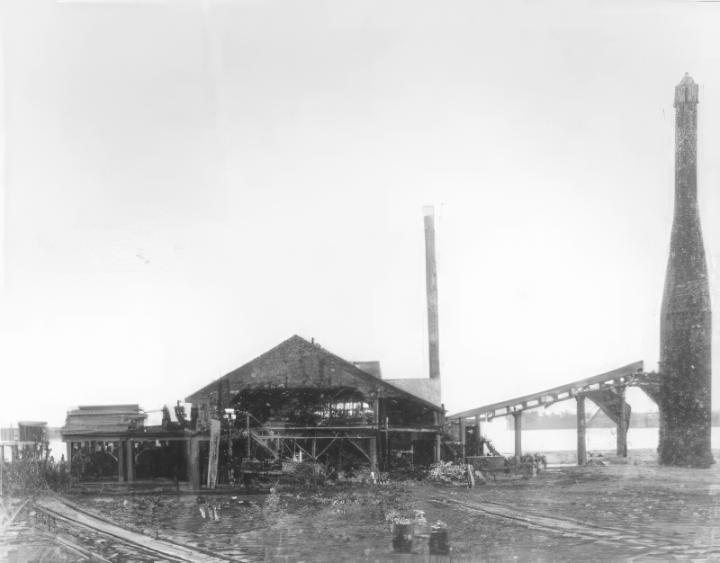
The Longford Lumber Company operated approximately five lumber camps in Longford Township. The timber was cut and floated down the Black River, and during the spring thaw, the logs were floated down river in a mad rush of water which raised the level of Lake St. John (near present day Longford Mills) by as much as 4-5 meters. This had an unusual two-fold effect on the Black River which, in the spring, flowed south into Lake St. John via the meandering St. John Creek. By summer’s end, the water in Lake St. John would reverse itself and flow out, and back north, into the Black River.
The timber companies, keen to create a more direct and reliable route by which to transport their logs from the Black River to the mills on Lake St. John, embarked on an ambitious plan. In 1869, the Rama Timber Transportation Company decided to build a narrow, 1.2km long canal to transport logs from the Black River southward to Lake St. John. The construction of this unusually straight ‘Log Canal’ meant that the crossings into and out of Lake St. John were reliable, regardless of water levels at any given time of the year. Armed with little more than picks and shovels, a group of hardy men and horses pulling crude road scrapers carved a trench through the boggy swamp and jagged rock leading from Lake St. John northeast towards the frozen Black River.
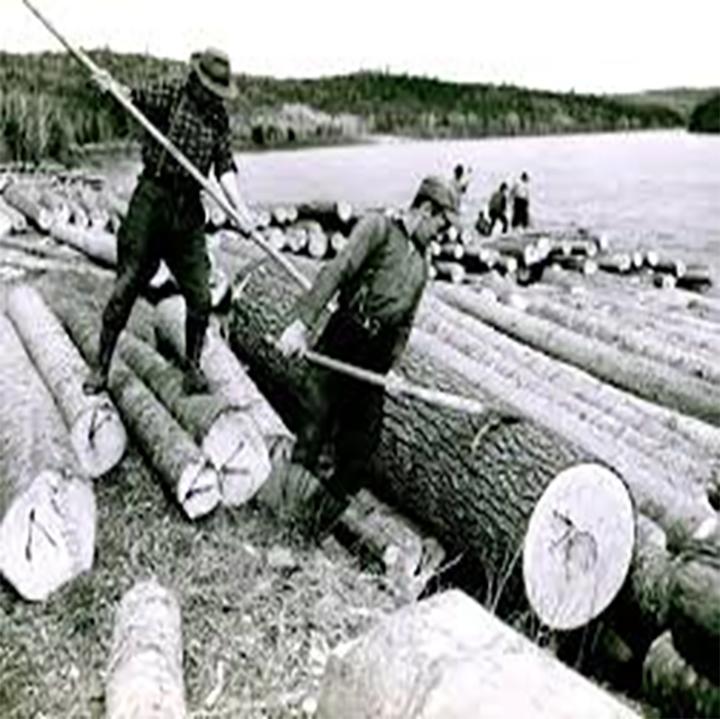
The grueling work was begun in the autumn of 1868 and completed before the start of summer of 1869. More than fifty men were employed on the endeavor and worked through the cold and blinding snowstorms of winter to complete the job in time for the spring log rush. The canal was officially opened on April 3, 1869, and to this day modern satellite maps reveal an unnaturally straight waterway extending from the meandering lines of the Black River down into Lake St. John, a lasting testament to the grit and incredible tenacity of early residents.
The ‘Lost Log Canal’ can be accessed from the Black River via the present-day MacMillan Sideroad, just south of Switch Road. Alternatively, kayaks and canoes can easily traverse Lake St. John and discover the entrance to the ‘lost’ canal, still navigable, at the northeast corner of the lake. This 157-year-old marvel can still be enjoyed by nature lovers and appears virtually untouched by time. The toil and sweat of the men who labored so valiantly through the bitter cold now long forgotten and belonging to an era when Washago and lumber industry of Lake St. John represented the very frontier of modern civilization.

